
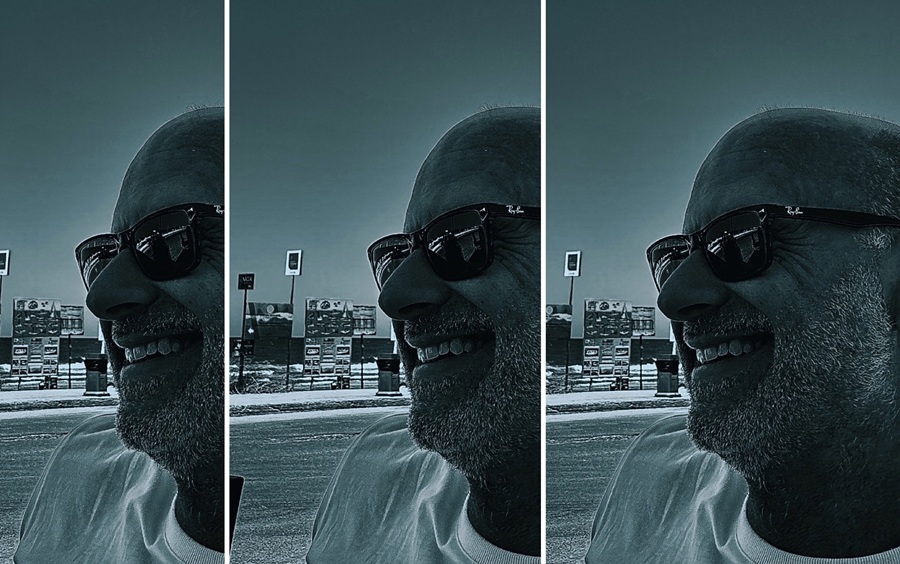
The Myth vs. the Reality
From the outside, life after an exit looks deceptively simple.
You sell the company. You gain freedom. You slow down. You enjoy the fruits of your labor. The story writes itself neatly, and people project onto it whatever version of “made it” they happen to believe in.
My experience was not like this at all. It was quieter, stranger, and far less linear.
The exit didn’t end momentum. It removed the structure that had contained it. What followed wasn’t relief so much as a prolonged recalibration – a period where the questions changed faster than the answers. The exit didn’t solve my life. It simply removed the constraints that had been organizing it for decades.
What came next unfolded slowly, unevenly, and not at all the way I would have predicted.
Year 1: Relief, Noise, and a Machine That Wouldn’t Shut Off
The first year after the exit was defined by excitement and relief – but only briefly.
There was real gratitude in finally exhaling. The pressure lifted. The stakes softened. For the first time in a long time, I didn’t wake up with a backlog of urgent decisions waiting for me. That alone felt like a gift.
But almost immediately, something else became apparent: I didn’t know how to stop.
Just a couple of months after the sale, I started another business. Not because I needed the money – that part was no longer relevant. And not because I had a particularly clear idea of what I wanted to build next. I did it because it was what I knew. For nearly thirty years, I had hustled hard. Building, fixing, pushing forward had been my default operating system. Turning it off didn’t feel like an option. At the time, it barely even felt like a choice.
Intellectually, I understood that I didn’t have to work anymore. Emotionally and behaviorally, the machine kept running. The rhythm of building, problem-solving, and momentum had been ingrained too deeply to disappear overnight. The idea of simply stopping felt foreign, almost impossible to imagine.
So I kept going.
In hindsight, that first year wasn’t really about direction. It was about inertia. About discovering that freedom without structure didn’t immediately translate into rest – it often translated into motion without clarity.
And at the time, I didn’t question it. I didn’t even recognize it as something to be questioned yet.
Year 2: Unfocused Drift and Intellectual Sprawl
If the first year was defined by inertia, the second was defined by curiosity = unchecked, fun, undisciplined curiosity.
Suddenly, everything looked interesting.
With no single operating mandate and no externally imposed constraints, my attention scattered. New ideas surfaced constantly. New industries looked compelling. New technologies promised leverage and reinvention. I was like the proverbial kid in a Lego store, surrounded by infinite pieces and convinced that I could – and maybe should – build everything.
I explored broadly. I experimented freely. I started things, paused them, revisited them, and layered new ideas on top of unfinished ones. Nothing felt obviously wrong, but very little felt anchored. Without realizing it at the time, I was substituting motion for direction.
The absence of urgency was liberating, but it also removed a natural filter. When everything is optional, discernment becomes the real work – and I hadn’t learned how to apply it yet. So I kept playing. Building. Testing. Tinkering. Always moving, rarely committing.
In retrospect, that year wasn’t wasteful. It was exploratory. But it was also unfocused. Intellectual sprawl crept in quietly, disguised as curiosity and experimentation. I was learning a lot, but not necessarily moving toward anything coherent.
At the time, it felt like freedom. Only later did I recognize it for what it was: a necessary but messy phase of recalibration, where breadth preceded clarity.
Year 3: Fading Relevance and Finding a Voice
By the third year, something subtler began to happen.
It wasn’t dramatic. There was no single moment I could point to. But gradually, unmistakably, my professional relevance started to fade. The calls slowed. The steady flow of emails thinned out. Zoom invites, once routine, became occasional. Then rare.
No one pushed me out. No bridges were burned. I simply wasn’t needed anymore.
That realization landed more quietly than I expected, but it lingered longer. For decades, my identity had been tightly coupled to being in the middle of things – making decisions, solving problems, being relied upon. Without that gravitational pull, something felt oddly weightless.
It was around this time that I started writing.
Not because I’m particularly good at it – I’m not – and not because I had ambitions of becoming a writer. I started writing because I still had things I wanted to say. Ideas, observations, and experiences that didn’t seem to have a natural outlet anymore. Writing became a way to stay in the conversation when the conversation no longer came to me automatically.
It was also a way to test whether my voice still mattered.
That question sat just beneath the surface for much of that year. Was I still relevant if I wasn’t running something full-time? Did my experience still have weight if I wasn’t attached to a title or a growing org chart? These weren’t existential crises, but they were real, and they were new.
In hindsight, Year 3 wasn’t about output or experimentation. It was about identity. About separating who I was from what I had built, and learning – slowly – that relevance doesn’t always announce itself the way it used to.
Sometimes, you have to claim it quietly.
Year 4: Clarity, Selectivity, and Finally Feeling at Home in It
By the fourth year, something finally shifts.
There’s no dramatic breakthrough, no announcement, no sense of having “figured it all out.” Instead, the noise recedes. The signal becomes clearer. The things that actually matter begin to stand out on their own, without effort.
I know now what’s important to me – and just as importantly, what isn’t.
That clarity takes time to earn. It doesn’t arrive through hustle or experimentation alone. It comes from letting enough things fall away that the remaining ones can be seen properly. The unfocused drift of earlier years gives way to something quieter and far more satisfying.
I still feel like the kid in the Lego store. The curiosity hasn’t gone anywhere. The desire to build, experiment, and create is very much alive. The difference is that now I have a plan. I don’t reach for every box. I don’t feel compelled to try everything. I choose deliberately.
I say no far more often than I say yes.
I still do meaningful work. I still surround myself with exceptional entrepreneurs and builders. I still serve on Boards. I still experiment and stay intellectually engaged. But I do it without pressure. Without the grind. Without the sense that every idea needs to be pursued immediately or every opportunity must be captured before it disappears.
If something doesn’t get done today, that’s fine. It will still be there tomorrow.
For the first time in my professional life, everything happens on my time, my schedule, and my priorities. Not because I’ve lost ambition, but because I’ve refined it.
And sitting in that place – after years of recalibration – feels better than I would have expected.
It feels earned.
What Actually Changed – And What Didn’t
Looking back across those four years, the most meaningful changes weren’t external. They were internal, structural, and largely invisible from the outside.
What changed was how I relate to work. I no longer confuse activity with progress, or breadth with ambition. I don’t feel compelled to manufacture urgency or chase momentum for its own sake. Time, once scarce and constantly under pressure, is now something I allocate deliberately. Focus has replaced volume. Precision has replaced accumulation.
What also changed is my tolerance. I’m far less willing to accept unnecessary complexity, misaligned incentives, or work that expands simply because it can. Scale is no longer a default aspiration. It’s a tool – useful in the right context, destructive in the wrong one.
What didn’t change is just as important.
I’m still a builder. Still curious. Still intellectually restless. I still enjoy hard problems, thoughtful people, and the quiet satisfaction of designing systems that work. I still care deeply about creating things that are well-constructed and durable – businesses, tools, relationships, and ways of working.
The difference now is selectivity.
I don’t need to prove anything through motion anymore. I don’t need to fill my calendar to justify my time. I don’t need to say yes to remain relevant. The work I choose to do is enough on its own.
Four years after the exit, life hasn’t become simpler in the way people imagine. But it has become clearer. And that clarity – earned slowly, unevenly, and without shortcuts – has turned out to be far more valuable than the freedom I thought I was chasing in the beginning.
That, more than anything else, is what life after the exit actually looks like.


[…] They pay attention. […]
ciprofloxacine
ciprofloxacine
lasix pill
lasix pill
vidalista 60 usa
vidalista 60 usa
orlistat comercial colombia
orlistat comercial colombia
avanafil vs levitra
avanafil vs levitra
semaglutide bijwerkingen
semaglutide bijwerkingen
xenical medication cost
xenical medication cost
sildenafil daily intake
sildenafil daily intake
vardenafil structure
vardenafil structure
xenical cvs
xenical cvs
ketoconazole shampoo overview
ketoconazole shampoo overview
ivermectin rosacea expert review
ivermectin rosacea expert review
ivermectin PK data
ivermectin PK data
minoxidil onset professional guide
minoxidil onset professional guide
sildenafil hematologic contraindications
sildenafil hematologic contraindications
vardenafil mode of action
vardenafil mode of action
orlistat health contraindications
orlistat health contraindications
augmentin vs amoxicillin medical summary
augmentin vs amoxicillin medical summary
PKDuration.com
PKDuration.com
PK and PD Terminology
PK and PD Terminology
sildenafil information resource
sildenafil information resource
sildenafil pharmacokinetic reference
sildenafil pharmacokinetic reference